Showing posts with label Empire. Show all posts

Tuesday, March 24, 2009

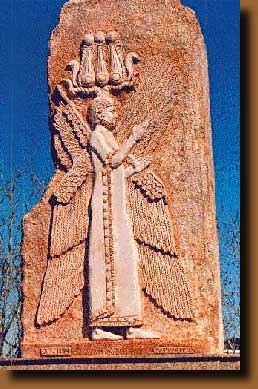
On Cyrus, Isaiah, and Empire?


Now I completely understand that there are numerous ways to read texts, and while often times this can be traced to an authors own presuppositions, this limitation should not be used to disregard all readings, there are still good or bad readings.  And while I am not familiar with many of John Hobbins' readings I wonder about his assessment of Israel's appropriation of Cyrus, and by implication  thier acceptance of his Empires.  I am not saying that his reading is wrong, I would just like to tease out some thoughts to see how he responds. 


Hobbin's uses the presence of Cyrus in Second Isaiah to argue for a favorable view of Cyrus and his Empire among those in exile.  He states:

"On the other hand, Persian imperialism in Isa 40-48 is described in glowing terms. The Persian conquest of Babylonia and the Levant under the leadership of Cyrus was viewed positively insofar as it brought an end to Babylonian imperialism, treated everyone with a measure of respect, and fixed as a goal the extension of its writ to the Aegean isles and coastlands. This passage most likely has Cyrus in mind (Isa 42:1-4)..."

It is true that YHWH's call of Cyrus is important, namely because the text associates him with the redemption of Israel.  Cyrus is a depiction of YHWH's power, as the text insinuates it is YHWH who raised up Cyrus from the beginning, it is YHWH who will bring the rulers to nothing, and again it is YHWH through Cyrus who will both destroy Babylon and rebuild Jerusalem.  Cyrus is even likened to Moses as the responsible agent in the what might be termed the new exodus, the text even goes on to call Cyrus a messiah and a shepherd, certainly insinuating beyond all doubt that YHWH is clearly affirming him. So Hobbin's is correct that Cyrus and thus by implication his empire is described in glowing terms.  


But this is precisely where his argument seems to break down, because despite YHWH's affirmation of Cyrus (obviously depicted through the prophet), it is this very depiction that becomes the center of Israel's argument with YHWH, for it is seemingly YHWH's choice of Cyrus as their rescuer that doesn't sit well with them.  Thus in 44.24-28, after YHWH declares himself the creator of all, the confuser of the wise, and the one who commands Jerusalem to be rebuilt, YHWH slips in that, 'it is I who say of Cyrus, ‘my shepherd’ and he will perform all my desire'.  Then in 45.9-13 YHWH announces misfortune to those who dare question their maker, pointing out that since he is the creator of all things that he can do what he pleases, exclaiming,  'I have aroused him [Cyrus] in justice’.  And again in 46.5-11 YHWH begins by mocking the idea that he can be regarded as an idol, reminding the rebels (Israel) that he alone knows the end from the beginning.  He finishes by declaring that he will accomplish his purposes 'calling a bird of prey from the East, the man of my purposes…'  And finally in 48.14, YHWH reaffirms that he 'loves him [Cyrus]’, and it is Cyrus who ‘…shall carry out his good pleasure on Babylon'.  


The point I am trying to make is that even though the text (as a substitute for the prophet and YHWH) seem to think highly of Cyrus, and his Empire, because they are to be YHWH's agents in freeing his people, the people don't seem to share this opinion.  Hence the disputations.


While the question of why this clash between YHWH and Israel over Cyrus, is  of course much harder to answer.  (It could have been similar to Habbakuk's disappointment with pagan liberators, I am not sure.)  The text no doubt uses the rejection of Cyrus, to highlight Israel’s refusal to accept YHWH's plan.  Thus bringing Israel’s recalcitrant heart into the open.  


So while the prophet may be describing Cyrus in glowing terms, the people are not buying it.  


_______________

See Further:


John Goldingay, The Message of Isaiah 40-55: A Literary-Theological Commentary, 253-300.

Lisbeth S. Fried, "Cyrus the Messiah? The Historical Background to Isaiah 45:1," 391. 

K.D. Jenner, "The Old Testament and Its Appreciation of Cyrus," Persica 10 (1982): 284.

Ralph W Klein, Israel in Exile, chapter 5.

Rikki Watts, "Consolation or Confrontation," 41-42. 

Monday, February 19, 2007

The Resistance of Radical Love: Part II: Hidden Transcripts


James C. Scott Hidden Transcripts a Way Forward?

For this we enlist the methodological frame provided by James C. Scott in his recent study Domination and the Arts of Resistance: Hidden Transcripts. Scott’s work opens up a new interpretive frame, which allows us to analyze Romans 13.1-7 without succumbing to a ‘political realism’ which would undermine the cruciform communities in which Paul seeks to create. Indeed Scott’s study allows for the apocalyptic aspects of Paul’s gospel to remain in the forefront, calling the community to see that the Roman imperial order is but an illusion, an ideology, and giving them the resources to live differently.

Scott suggests that in any political situation where an elite class dominates segments of the population, you have an implicit or explicit ruling ideology, with differing levels of discourse throughout the population. Like performers in a play, there is an official script in which the performers are expected to perform; this script, according to Scott, is managed by the ruling elites, and is made up of the ruling ideology, and is designated the ‘public transcript’. Scott likens the ‘public transcript’ to that of a ‘self-portrait,’ a painting demonstrating how the dominant elites would like the rest of the population to see them.[1] This is contrasted by the ‘hidden transcripts’ which are the discourses that take place ‘offstage,’ beyond the intimidating gaze of power holders, and which diverge from the official script.[2] The oppressed group’s survival in such a society usually depends on their seeming compliance and obedience to the ‘onstage’ script, which follows the political play of the elite, hoping to find recourse for their interests within the prevailing ideology, without appearing in the least bit seditious.[3] Of course this is not the only recourse for the oppressed, the ‘hidden transcripts’ which while relegated to the ‘offstage’, beyond the scrutiny of the power holders, offers the oppressed group, a ‘politics of disguise and anonymity that takes place in public view, but is designed to have a double meaning in order to shield the identity of the actors.’[4]

Scott further nuances his discussion of both ‘public’ and ‘hidden’ transcripts to include both the elites whom have power and the oppressed who reside at the other end of the spectrum. Accordingly, each group manifests to some degree the ability to perform both ‘public’ and ‘hidden’ transcripts. Thus, for example, the oppressed in peasant societies may partake in activities such as poaching, pilfering, clandestine tax evasion, and intentionally shabby work for landlords. All such activities are part and parcel of the hidden transcript. Yet for dominant elites, the hidden transcript might include clandestine luxury and privilege, the covert use of hired thugs, bribery, and tampering with land tides. These practices, in each case, are in breach of the public transcript of the ruling elites and are, if at all possible, kept offstage and unavowed.[5] Meanwhile the public transcript remains quite stable, albeit taking a good deal of maintenance in order to consistently evoke the ruling ideology through symbols of domination, demonstrations and various enactments of power. According to Scott, ‘Every visible, outward use of power, each command, each act of deference, each list and ranking, each ceremonial order, each public punishment, each use of an honorific title or a term of derogation is a symbolic gesture of domination that serves to manifest and reinforce a hierarchical order.’ Of course the persistence of any pattern of domination is always problematic, and is always a balance between the amount of resistance there is to the ruling elites and the ‘force’ required to keep it in place.[6]

Scott’s detection of the hidden transcript depends largely on the context of domination in the society. Since the hidden transcript is a social product and a result of power relations among the elites of society and their subordinates, he likens it to a type of folk culture, “the hidden transcript has no reality as pure thought,” he states “it exists only to the extent it is practiced, articulated, enacted, and disseminated within these offstage social sites.” [7] It is the detection of this double entendre that is especially hard to do in ancient texts since the texts in question can often be read as being complicitous with the official transcript, thus often providing ‘convincing’ evidence of willing, even enthusiastic participation with the forces which dominate.[8] However since it is this seemingly willingness to contribute to the sanitized official transcript that often allows the oppressed to avoid detection; the reader of ancient texts must carefully look for clues that might tip off ‘insiders’, that something else is indeed going on.[9] According to Scott the typical way to rebel against the official transcript is to hide under the protective flattery which ensures that once the oppressed come under any scrutiny from above the rebels can claim to be perfect citizens.[10] In fact it is not uncommon for the oppressed to clothe their resistance and defiance in ritualism of subordination that serve both to disguise their purposes and to provide them with a ready route of retreat that may soften the consequences of possible failure.[11] Following Scott’s lead we may then consider the dominant discourse as a plastic idiom of dialect that is capable of carrying an enormous variety of meanings, including those that are subversive even while resembling the dominant discourse itself.[12] Scott reminds us that unless the group has completely revolutionary ends the terrain of dominant discourse is the only plausible arena of struggle.[13]


[1] James C. Scott, Domination and the Arts of Resistance: Hidden Transcripts (New Haven: Yale University Press, 1990), 18.

[2] Scott, Hidden Transcripts, 18.

[3] Scott, Hidden Transcripts, 18.

[4] Scott, Hidden Transcripts, 19.

[5] Scott, Hidden Transcripts, 14.

[6] Scott, Hidden Transcripts, 45. Scott further states that. “Rituals of subordination are a means of demonstrating that a given system of domination is stable, effective, and here stay (66).”

[7] Scott, Hidden Transcripts, 119.

[8] Scott, Hidden Transcripts, 86.

[9] Scott, Hidden Transcripts, 87.

[10] Scott, Hidden Transcripts, 89-90.

[11] Scott, Hidden Transcripts, 96.

[12] Scott, Hidden Transcripts, 103.

[13] Scott, Hidden Transcripts, 103.

Tuesday, February 13, 2007

The Resistance of Radical Love: Re-reading Romans 13.1-7


The following is a paper that I have been polishing up, It will probably be an addendum in my dissertation, let me know what you think in the comments! All constructive feedback is welcome.


The Resistance of Radical Love: Re-reading Romans 13.1-7

Reading Romans 13.1-7 in the Public Square

The text of Romans 13.1-7 has been used to sanction a litany of terrible offenses throughout its history of interpretation. In fact it is impossible to read these seven verses and remain unshaken by our own agonizing awareness, that these verses were used to sanction such offenses as the American slave trade, the horrors of Auschwitz, South African apartheid, and the disappeared in Latin America. How can imagine to speak the bible in the public square when to many around the world these texts are nothing but another means of oppression. More pointedly for our purposes how do we reconcile the Pauline plea for the status quo here, and those injustices and crimes against humanity that have hidden and continue to hide behind these verses?[1]

While the answers to these questions are not easy, any examination of such issues must start with a discussion of Pauline ethics. There has seemingly always been two ways to read the ethical statements of Paul throughout the history of interpretation. The first is to see all the ethical teachings of Paul as God’s commandments and thus eternally and universally binding; the second is to see Paul’s ethical teaching as primarily outmoded, irrelevant, ridiculous and anachronistic.[2] What this rather simple dichotomy seems to miss is the paramount importance of the ethics of interpretation in any ethical discussion. Elizabeth Schussler Fiorenza in her 1987 SBL presidential address called for a re-centering of biblical studies into a more liberating praxis, which has taken an exceeding long time in my opinion to reach the evangelical circles. Schussler Fiorenza called for biblical scholars to ask such penetrating questions as (1) who is reading the text (whether individual or group) (2) which Bible does the interpretive community hold to, what authority does it grant to the text (that is, what view of the text does the interpretive community hold, what authority does it grant to the text) (3) how does it interpret the texts (which methods are used) and (4) why does the individual or community interpret the text (whose interests are at stake, what does the interpretive community want to achieve with their acts of interpretation)? With these questions, power becomes central to the interpretive task: Whose interests does the interpretation serve? What kind of worlds does the text envision? What roles, duties and values does it advocate? These questions, Schussler Fiorenza maintains, require a double ethics – an ethics of historical reading and an ethics of accountability.[3] It is the ethics of accountability which has been largely ignored when Christians attempt to speak in the public square. This paper aims to explore an interpretation of Romans 13.1-7 focusing primarily on two questions: (1) what kind of world does the interpretation of the texts envision, and (2) what might a responsible interpretation, attempting to mitigate the negative effects these seven verses have had throughout the centuries, look like.

Being mindful of the ethics of interpretation when dealing with a passage as controversial and potentially oppressive as Romans 13.1-7 is important not only because of how this passage has been used in the past to not only tolerate, but also to reinforce oppression, but also because it has been used unwittingly to distort and dismantle the cruciform ethics of the Cross. The problem here is twofold: (1) how do we reconcile Paul’s words here with what we have come to conclude about the Gospel elsewhere and (2) how do they fit with what we have come to understand about Paul? These questions are again not easily answered, in fact many modern day interpreters would rather disregard this text as unauthentic then to deal with its potentially embarrassing statements.[4] Trying to reconcile what we know of the Roman Empire and what Paul says here is often difficult as the statement by Joseph Klausener suggests:

When one considers all the shameful deeds of oppression, the murders and extortions, of the Roman government in every place where the hand of its authority reached, and particularly in the lands and provinces where Paul lived and traveled, one cannot escape a feeling of resentment and protest against this recital of praise for the tyranny of Caligula and Nero, or of Gessius Florus. One is forced to see in it flattery of the rulers.[5]

For the twenty first century mind, with our ability to teleological asses the general tenures of governments, Paul’s rhetoric seems at the very least to be over stated, and more appropriately flat out wrong.[6] One wonders whether Paul had forgotten that it was the Romans who were ultimately responsible for the death of the Christ; could he really believe that Governments only punish those who do wrong (Romans 13.4), and could he, a reputed prisoner, come to the honest conclusion that only those who have done wrong have reason to fear? Could Paul really be that deluded about the systemic evil of the Roman Empire?

Romans 13 has puzzled scholars for ages namely because it seems to offer a defense of the Roman Imperial order, and how can such a message be reconciled with the revolutionary defense of the orphan and widow. Many answers have been given to this conundrum whether Paul is simply flattering the powers, or merely an unconcerned proprietor of the status quo, none seem to make sense of what Paul is doing in the letter to Romans as a whole, much less how it fits in to the paraenesis. I hope in this paper to at least explore an alternative option that might help de-stable the sort of conservative readings of Paul so often lauded by those who have a stake in power.


[1] Winsome Munro, "Romans 13:1-7: Apartheid's Last Biblical Refuge," Biblical Theology Bulletin 20, no. 4 (1990): 161-68; Stanley E. Porter, "Romans13.1-7 as Pauline Political Rhetoric," Filologia Neotestamentaria 3 (1990): 115-39.

[2] Victor Paul Furnish, The Moral Teaching of Paul: Selected Issues, 2nd ed. (Nashville: Abingdon, 1985), 25.

[3] Elizabeth Schussler Fiorenza, "The Ethics of Interpretation: De-Centering Biblical Scholarship," Journal of Biblical Literature 107, no. 1 (1988): 14-15. See also, Daniel Patte, Ethics of Biblical Interpretation: A Reevaluation, 1st ed. (Louisville: Westminster John Knox Press, 1995), 1-12.

[4] See the discussion in Leander E. Keck, "What Makes Romans Tick?," in Pauline Theology Iii: Romans, ed. David M. Hay and E. Elizabeth Johnson (Minneapolis: Fortress, 1995), 3-29. Also c.f. James Kallas, "Rom 13:1-7: An Interpolation," New Testament Studies, no. 11: 365-74; J. C. O'Neill, Paul's Letter to the Romans (Middlesex: Penguin, 1975), 207-08.

[5] Joseph Klausner, From Jesus to Paul, trans. William F. Stinespring (New York: Macmillan, 1943), 565.

[6] One suspects that if Paul himself could be summonsed from the grave he would surely rephrase this evaluation of government.